A new driveway feels solid within a day, but it keeps getting stronger for weeks. So how long does concrete take to cure? Most mixes reach their design strength in about 28 days, and they keep hardening slowly after that. What happens in that first month, and in the first winter, shapes how the surface looks years from now. This guide covers the care side. If you’re still planning a project, start with our concrete services.
Curing vs. Drying: What Happens Inside the Slab
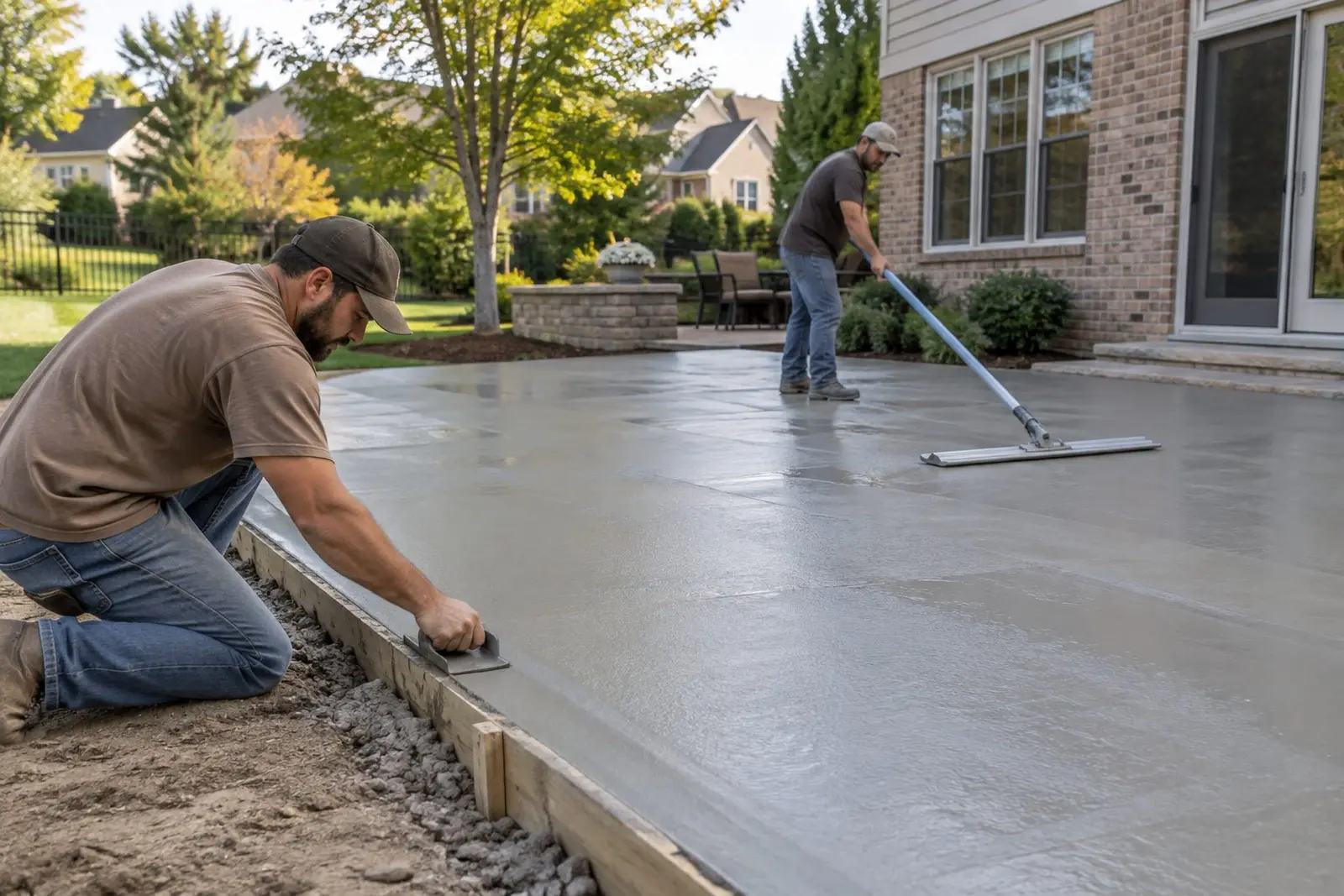
People often say concrete is drying. It’s really curing. Cement reacts with water and grows crystals that bind sand and stone together, and that reaction needs moisture to continue.
If the surface dries out too fast, the top layer ends up weaker than the slab below it. That’s where dusting, crazing (a web of fine surface cracks) and early scaling come from. Crews prevent it with curing compound, curing blankets or by keeping the slab damp. Follow your contractor’s instructions here. Some ask homeowners to mist the slab on hot days. Others apply a curing compound and ask you to leave it alone.
How Long Does Concrete Take to Cure Before You Use It?
As general guidance, most new slabs handle foot traffic after a day or two, passenger cars after about a week, and heavy loads after about a month. Cool weather stretches every one of those numbers. Our day-by-day new concrete timeline breaks the first month down in detail.
First-Month Care Checklist
- Keep moving trucks, dumpsters, RVs and loaded trailers off the slab for the full first month.
- Stay off the edges with car tires. Edges have no soil or curb holding them and chip or crack first.
- Don’t drag metal furniture, ladders or tools across the surface.
- Hold off on planters, rugs and grill mats that trap moisture or leave rust rings.
- Wipe up oil, gasoline and fertilizer promptly. Iron-rich lawn fertilizer leaves orange stains.
- Skip the pressure washer and any sealer until the slab has cured.
Your Concrete's First Indiana Winter
Young concrete is more vulnerable to freeze-thaw damage than mature concrete. The usual advice is simple: no de-icing salt at all during the first winter. Use sand for traction, shovel early before snow gets packed down, and rinse off the road salt that drips from your car’s wheel wells. Our guide to de-icing salt and concrete explains which products cause the most damage.
This matters for coverage too. Every Golden Paw Concrete job carries a 3-year workmanship warranty. It covers problems caused by work done incorrectly. It doesn’t cover damage from de-icing salt.
Concrete Sealer: When and Whether to Seal
A concrete sealer slows down water and salt brine soaking into the surface. Decorative concrete benefits the most, because sealer protects the color and the pattern. Many broom-finish driveways get sealed as well, though it’s more optional there.
Timing matters. Most sealer manufacturers want the slab cured for about 28 to 30 days and list a minimum air temperature on the label, so a late-fall pour may wait until spring. Penetrating sealers soak in without changing the look. Film-forming acrylic sealers add sheen and deepen color on decorative concrete. Reseal when water stops beading on the surface.
Long-Term Care for a Long-Lasting Slab
Most long-term care is about water. Point downspouts away from the slab. Keep soil and mulch from building up along the edges, and fill washouts beside the concrete so rain can’t carve out the sub-base. Sweep leaves before they stain. Watch for panels that start to sink or tilt, because a small settlement problem is easier to address early with concrete repair than after a winter of frost.
Is it normal for new concrete to look blotchy?
Yes, in the first weeks. New concrete often dries unevenly, so some areas look darker than others. The color usually evens out as moisture leaves the slab over the first month or so.
Will my new concrete crack?
Some hairline cracking is normal, which is why slabs have control joints. Our guide on why concrete cracks in Indiana explains which cracks are expected and which deserve a closer look.
Questions About Your New Concrete?
Planning a new driveway, patio or walkway? Golden Paw Concrete builds them across Indianapolis, and we’re glad to answer care questions during your in-person consultation. Call or text (317) 672-0966 or request a free estimate.