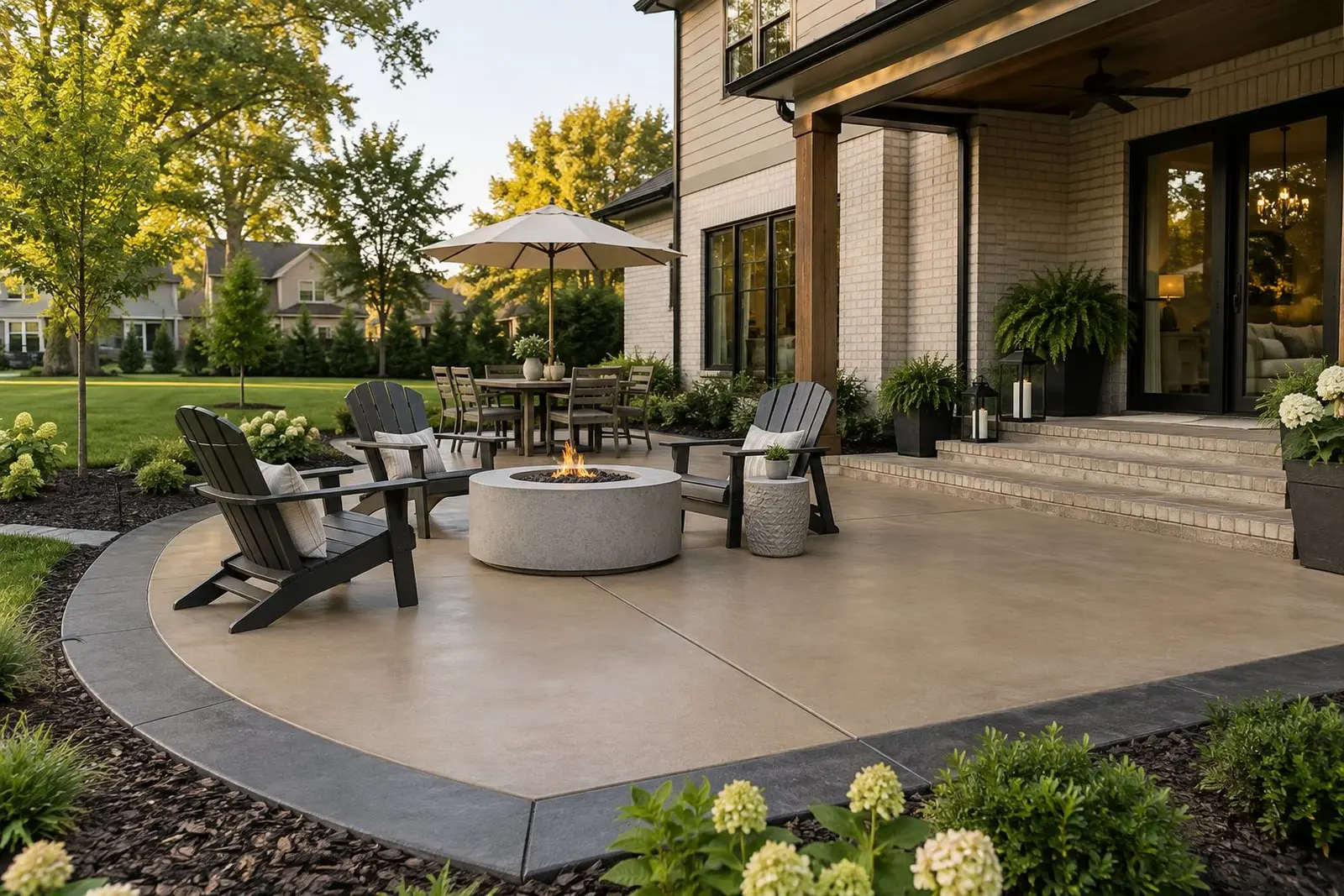
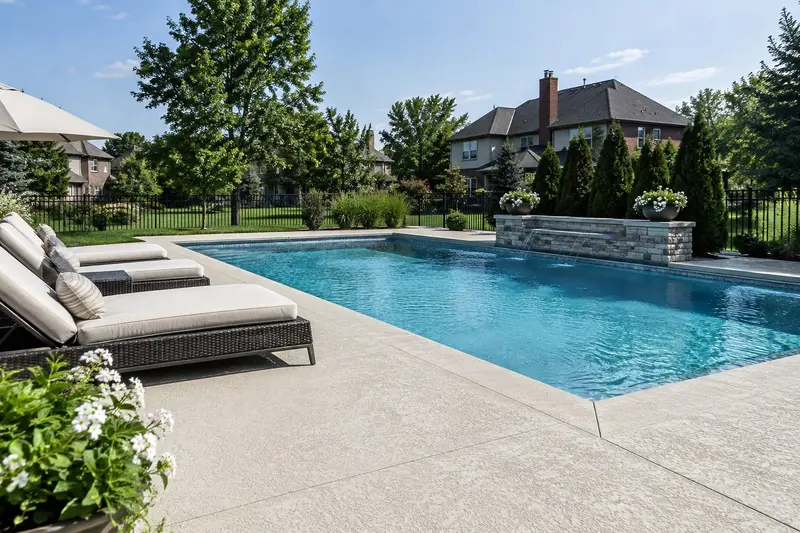
Gray is fine. Plenty of Fortville homeowners want something warmer under the patio table, though. There are two main ways to get color into concrete: integral color concrete, where the pigment is mixed into the batch, and stain, applied to the surface after the slab cures. They look different on day one and they age differently. This post covers both, plus how to pick a shade that suits the house. Our colored and stained concrete page shows the finished looks.
How Integral Color Concrete Works
With integral color, pigment goes into the concrete at the plant or the mixer, so the color runs all the way through the slab. Chip a corner and the inside is the same color as the top. The tone is even and a little muted, since the pigment shares the surface with sand and cement.
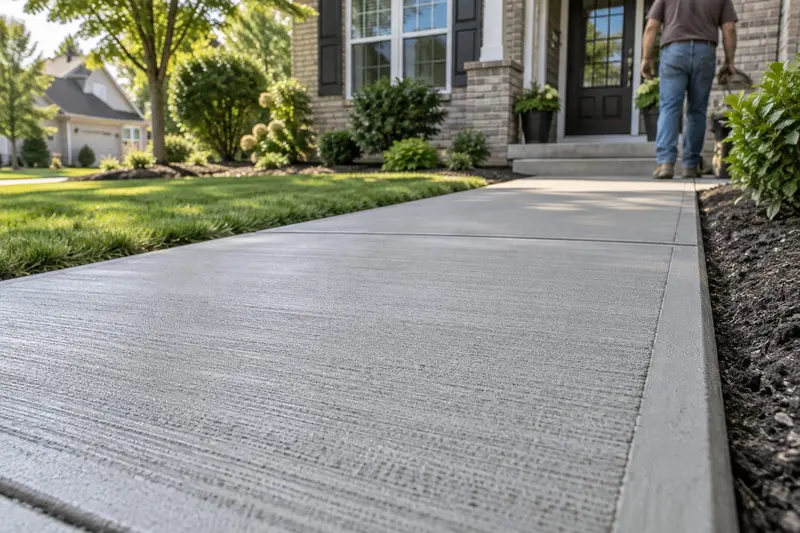
Integral color pairs well with a broom finish or a stamp. On stamped patios it usually serves as the base color, with a darker release color brushed on to settle into the joints.
How Stain Works
Stain is applied after the concrete has cured. It soaks into the top layer rather than coating it. The result is often richer and more varied than integral color, with natural mottling that can look like aged stone or leather. Two slabs stained the same color rarely look identical, which is part of the appeal.
Stain can also be added to existing concrete that is in good shape. That makes it an option for an older patio that is sound but dull. A cracked or heaving slab is a different story.
How Each Method Wears
This is where the two really part ways. Integral color is part of the concrete, so scuffs, chips and foot traffic reveal more of the same color. It can lighten a bit with sun and weather, but it doesn’t wear off.
Stain lives near the surface. High-traffic paths, chair legs and grill spills wear it faster than the rest of the slab, so a stained patio may need touch-ups or a fresh coat over the years. A good sealer slows that down a lot.
Either way, Indiana winters are hard on colored surfaces. De-icing salt and freeze-thaw cycles attack the top layer first, and that is where the color shows. Keep rock salt off a colored patio and reseal on a regular schedule.
Picking a Color That Suits the House
Pick the color outside, not from a screen. Monitors and printed charts both lie a little. A few rules of thumb help:
- Take your cue from fixed materials: brick, stone veneer, roof shingles and trim.
- Warm tans, browns and terracotta suit red brick and earth-toned siding.
- Charcoal and cool grays sit well with white, gray or blue siding.
- Dark colors absorb heat. Bare feet on a south-facing patio will notice.
- Colors look darker wet and lighter dry, and sealer deepens them slightly.
If you can’t decide, a two-tone patio with a contrasting border is a safe way to add color without committing the whole slab to one shade. Our guide to choosing a concrete finish covers how color fits with the other finishes.
Planning a Colored Patio
Color is decided before pour day, so it belongs in the written scope with the size, shape and finish. If you are still sketching the layout, our concrete patios page walks through the rest of the project.
A few practical points are worth knowing before you choose. Stain can’t go on until the new slab has cured, so a stained patio may get its color some time after pour day. Integral color, on the other hand, is locked in the moment the truck arrives, so pick it with care. If the new patio will touch an existing walk or driveway, expect some contrast between old and new concrete. Choosing a color on purpose often looks better than trying to match weathered gray. A colored patio next to a plain gray walk can look planned rather than patched.
Colored Patios in Fortville
Fortville is part of the area Golden Paw Concrete serves; our service area page lists the other towns we cover. Request a free estimate and we’ll bring the color conversation to your back yard, or call or text (317) 672-0966.