Concrete vs. Pavers: Which Fits Your Patio or Driveway?
Concrete vs pavers is one of the first decisions people weigh when planning a patio or driveway. Both can look great and last a long time when they are installed well. They behave differently, though, especially through Indiana freeze-thaw winters, and they ask different things of you in upkeep. Here is an honest comparison. For the full picture on poured slabs, see our concrete patios page.
Concrete vs Pavers at a Glance
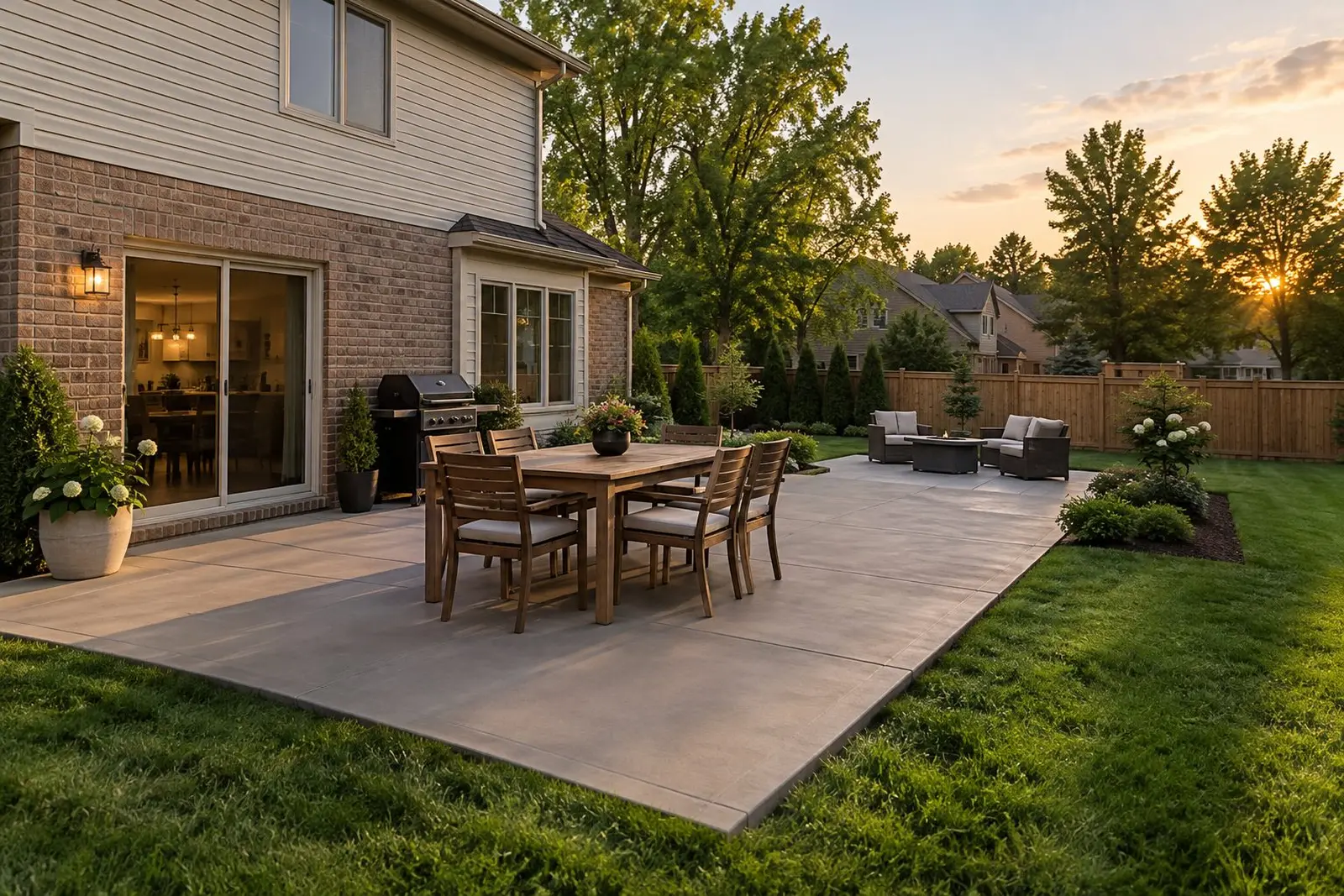
Poured concrete is one continuous slab, placed and finished on site. Control joints guide where it cracks.
Pavers are individual units of concrete, brick or stone, laid on a bed of sand and gravel with sand-filled joints between them.
Both depend on what is underneath. A poorly prepared base will fail either one.
How Each Handles Indiana Freeze-Thaw
Our winters are hard on anything outdoors. Water soaks into clay soil, freezes, expands and pushes up, then thaws and lets go. That cycle repeats many times a winter.
Pavers can flex. Each unit moves a little on its own, so frost heave tends to show up as uneven spots, not cracks. Over time some pavers sink or lift and need to be reset. A concrete slab doesn’t flex. When the ground moves under it, it can crack, which is why control joints, a well-compacted base and good drainage matter so much. Our guide on why concrete cracks in Indiana explains the causes. Salt is hard on both, so go easy on rock salt whichever you choose.
Maintenance Over the Years
Pavers need regular attention to their joints. Sand washes out and has to be topped up. Weeds and ants find their way into the gaps. Sections that settle need to be lifted, re-leveled and relaid.
Concrete asks for less week to week. Keep it clean, keep downspouts draining away from it and keep salt off it. Decorative concrete should be sealed every few years. When a slab does crack or settle, there are fixes short of replacement, from crack work to concrete repair of damaged sections. The trade-off is that a concrete repair can show, while a reset paver usually blends back in.
Look and Design Options
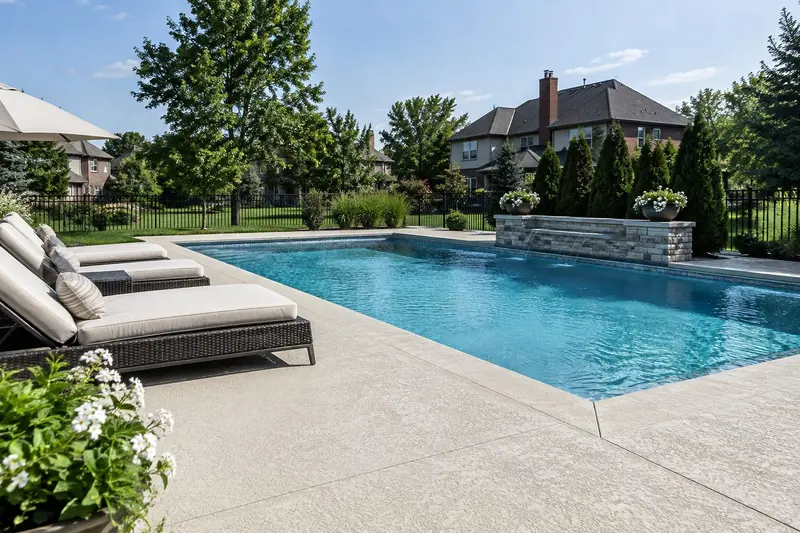
Pavers have a distinct look, with real joints and individual units. That appeal is a big reason people choose them. Poured concrete covers more ground than most people expect, though. A broom finish is clean and practical. Color can warm it up. Exposed aggregate shows off the stone. And stamped concrete gives you the look of brick, slate or stone in one solid slab, without joints for weeds to grow in.
If you are torn between looks, our guide to choosing a concrete finish lays out the options side by side.
Cost Drivers for Each
Both are priced on similar factors: the size of the area, base preparation, removal of what’s there now, site access and the finish or product you choose. Pavers add the labor of setting each unit by hand. Decorative concrete adds coloring and stamping steps. The only fair comparison is two written estimates for the same space. Our concrete cost guide walks through each of those drivers.
Where Golden Paw Fits
We are a concrete company, so we won’t pretend to be neutral about what we pour. What we will do is tell you plainly whether concrete suits your yard, your drainage and the way you use the space. If you like the paver look, we’ll show you how stamped and colored concrete can get you close in one slab.
Is concrete or pavers better for a driveway in Indiana?
Both can work. Concrete gives a solid surface that is easy to plow and shovel, which matters through a snowy Indianapolis winter. Pavers can be reset after heaving but need joint upkeep under tire traffic. Base preparation and drainage decide more than the material does.
Can stamped concrete look like pavers?
Yes. Brick, cobblestone and slate stamp patterns give a paver look on a single slab, with color to match your house. Joints are cut into the pattern so they blend in.
Talk Through Your Options
Still deciding? Golden Paw Concrete will meet you on site, look at the ground and the drainage and explain the trade-offs without any pressure. Call or text (317) 672-0966, or request a free estimate in Indianapolis or a nearby town.