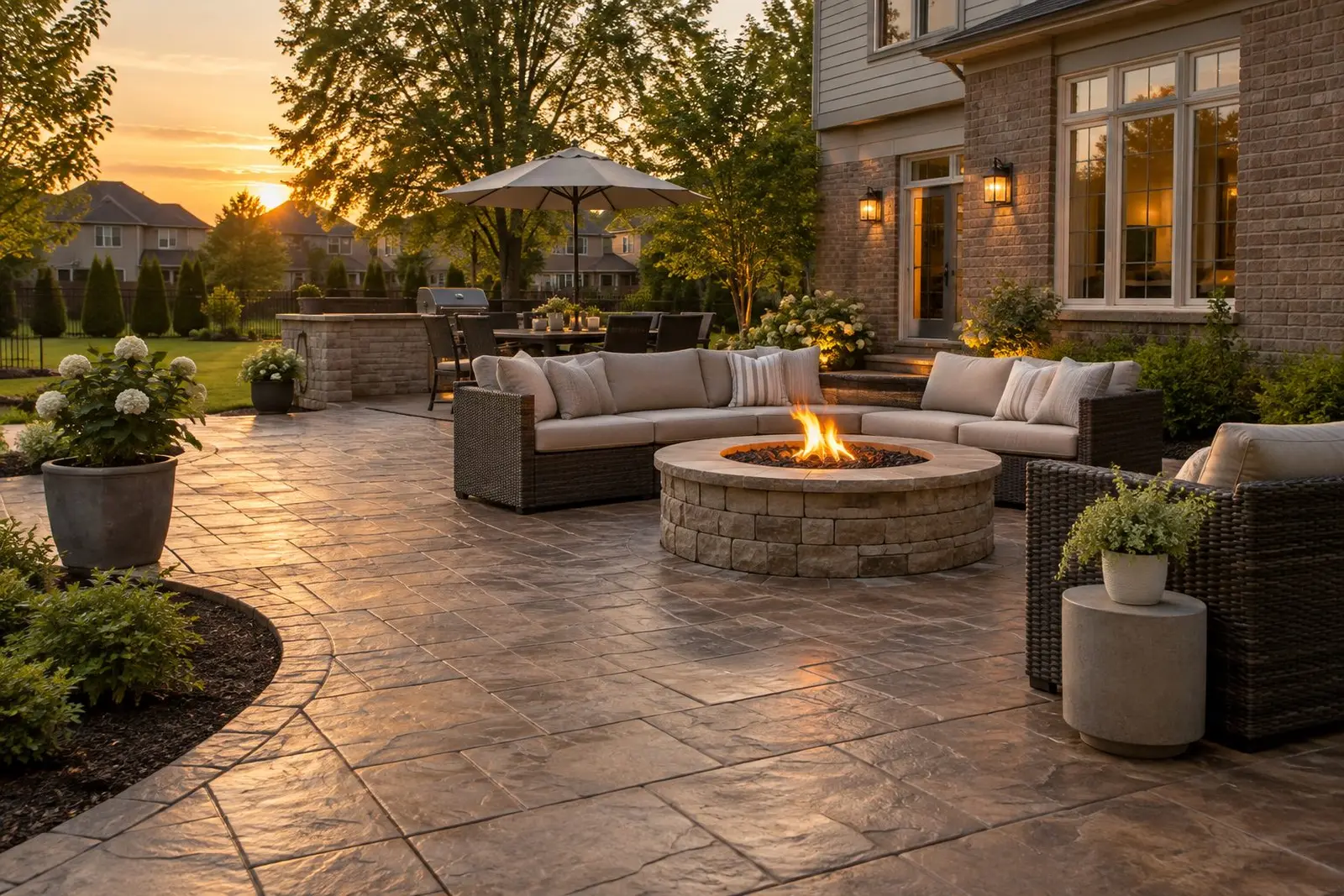
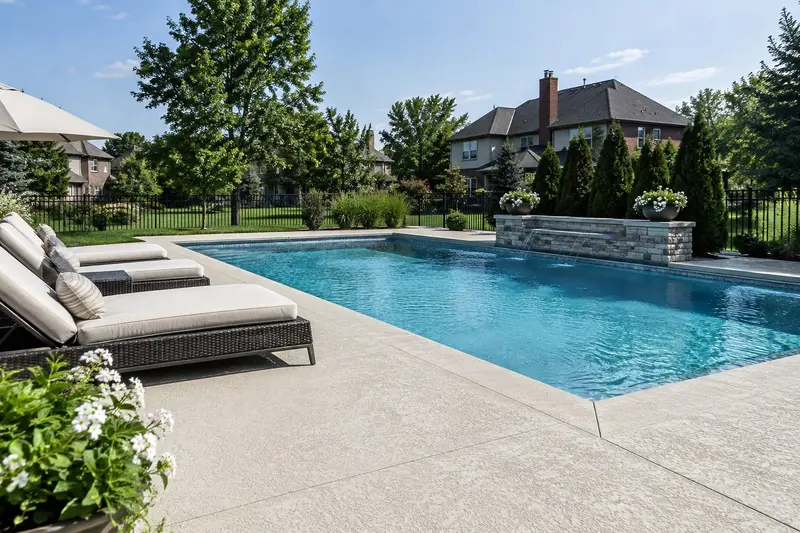
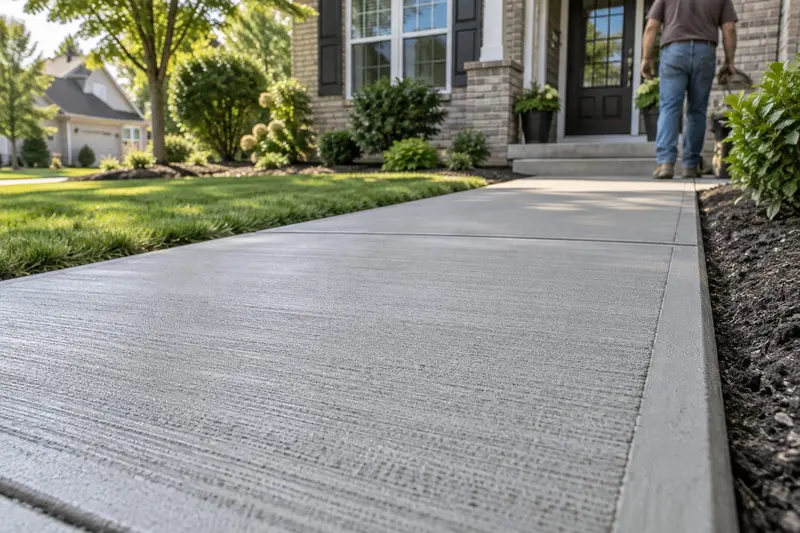
Stamped concrete patterns let one poured slab look like cut stone, brick or weathered wood. It is also the most searched decorative finish for patios around Indianapolis. The choice can feel endless when you start scrolling photos, though. This post narrows it down: the main pattern families, how to pick colors that suit your house and a few practical points people miss. For the finish itself, start with our stamped concrete page.
Popular Stamped Concrete Patterns
Most stamp mats fall into a handful of families. Within each one, manufacturers make dozens of variations.
- Slate and ashlar. Rectangular and square stones laid in a repeating grid. Clean and slightly formal, and a good match for brick or stone fronts.
- Random stone and flagstone. Irregular shapes with uneven grout lines. They read as natural and relaxed, which suits backyards with plenty of landscaping.
- Cobblestone. Small rounded stones. Old-world and busy, so it works best as a border or on a smaller area.
- Brick. Running bond, herringbone or basket weave. Classic on walkways and around older homes with brick details.
- Wood plank. Long boards with grain texture. A popular way to get a deck look without boards that splinter or rot.
- Texture-only stamps. Stone grain with no grout lines. A subtle choice when you want depth without a visible pattern.
Matching a Pattern to Your House
Start with what is already there. Look at your siding, trim, roof and any brick or stone on the front of the house. A patio that echoes one of those materials usually looks like it belongs. Ashlar slate sits well next to a stone water table. Random stone suits a backyard with mature trees and planting beds.
Then think about scale. Large-format patterns can look busy on a narrow walkway. Small cobblestone across a big patio can feel cluttered. Laying a sample photo over a picture of your own yard helps more than you’d think.
Choosing Stamped Concrete Colors
Stamped work usually combines two colors. The base color goes through the slab or onto its surface. The accent, often called a release or antiquing color, settles into the low spots and grout lines to give the stone texture depth.
- Integral color is mixed into the concrete, so the color runs all the way through. A chip shows the same shade underneath.
- Surface color is worked into the top while the concrete is fresh. It tends to give richer, brighter tones.
- Accent color creates the two-tone look. Darker accents read more rustic. Close tones read quieter and more modern.
Warm tans, grays and earthy browns are the safe bets around most Indianapolis homes. Very light colors show tire marks and leaf stains. Very dark colors get hot under bare feet in July. Our colored and stained concrete page covers the coloring methods in more depth.
Pattern Scale, Joints and Traction
Concrete needs control joints so it cracks in a straight line where you planned, not across the middle of a stone. On a stamped slab, a good installer hides those joints in the grout lines of the pattern. Ask how that will be handled before the pour.
Traction is the other practical point. Deeper textures give more grip around pools and on steps. Smoother patterns can turn slick once sealed and wet. If the slab will sit next to water, say so at the estimate and we’ll steer the pattern choice toward grip. Our pool deck page talks more about surfaces around water.
How Pattern Choices Affect the Budget
Pattern and color decisions do change the price. More colors, borders in a second pattern, hand-detailed edges and complex shapes all add crew time. We cover the general factors in what drives concrete cost, so we won’t repeat them here. The short version: pick the pattern you love for the main field, then decide whether a border or second color earns its place.
Keeping Stamped Concrete Looking Sharp
Decorative concrete should be sealed. A sealer deepens the color, helps block stains and slows the damage from water and de-icing salt during freeze-thaw winters. Plan on resealing every few years and keep rock salt off the surface. Our post on stamped patio care has the full routine.
See Stamped Patterns in Person
Photos only go so far. At your free consultation, Golden Paw Concrete looks at your house, your yard and how you plan to use the space, then helps you narrow the pattern and color choices before anything is written up. Call or text (317) 672-0966, or request a free estimate.