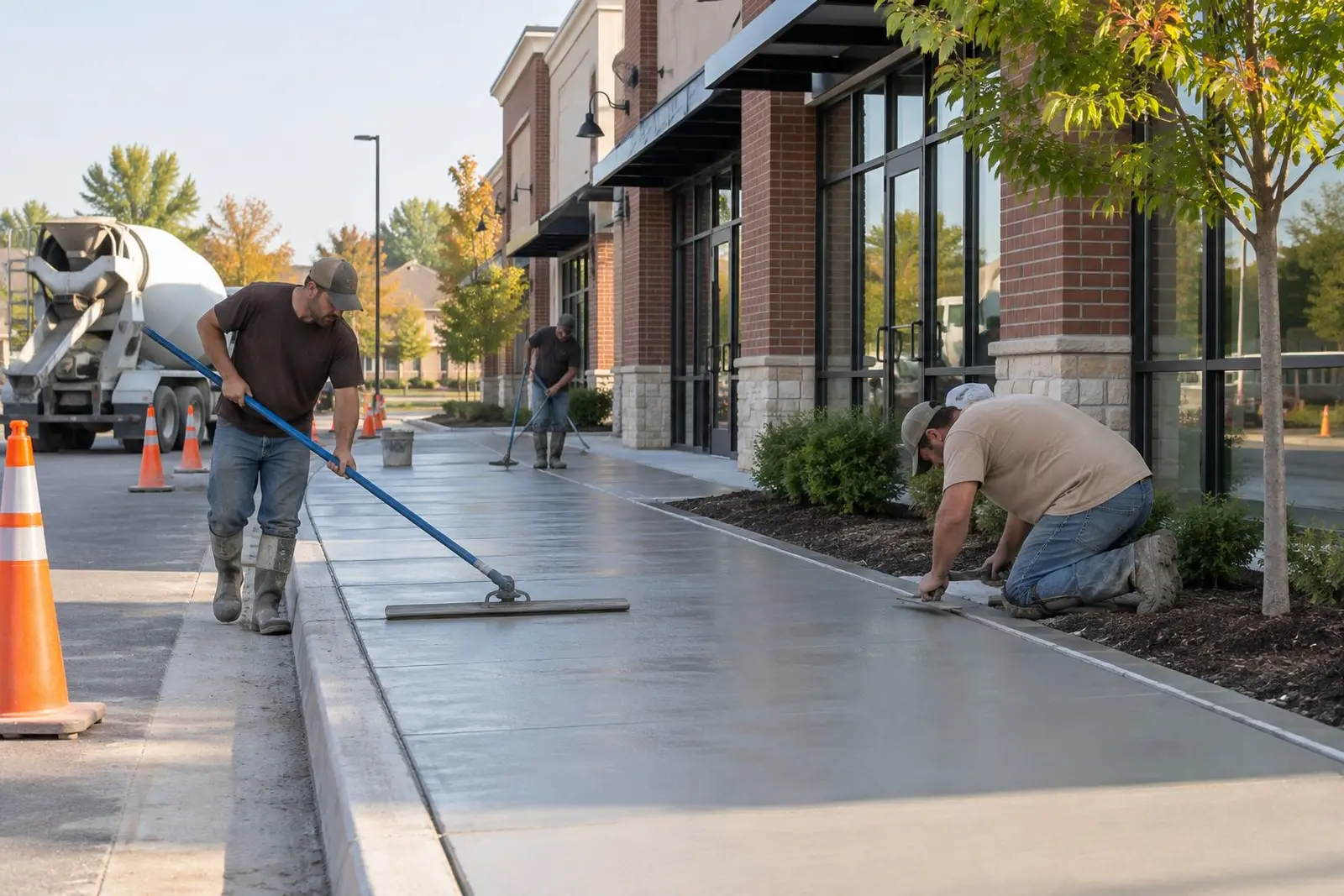
Commercial concrete flatwork doesn’t wear evenly. On most Indianapolis properties, a few spots take nearly all the abuse: the drive apron at the street, the walk outside the front door, the dumpster pad and, on industrial sites, the dock area. Knowing where those spots are helps you plan for them, build them right the first time and catch problems before they become trip hazards or broken slabs. Our commercial concrete page covers the full service. This post looks at the high-wear areas one at a time.
Where Commercial Concrete Flatwork Wears First
Wear comes from three forces: weight, turning tires and water. Heavy vehicles flex a slab each time they cross it. Tires that turn in place scrub the surface. Water and de-icing salt work into every crack and joint through an Indiana winter. The areas that get all three fail first.
Drive Aprons and Entrances
The apron where your lot meets the street carries every vehicle that visits, including delivery trucks and garbage trucks. It also catches salty slush from the road all winter. Aprons are commonly built thicker than the lot or walk behind them, with reinforcement and joints laid out so cracks stay controlled. Because aprons often sit in or near the public right-of-way, the work may need a permit. Requirements vary by city, and Golden Paw applies for any necessary permits.
When an apron or walk is already worn, the choice between patching and replacing follows the same logic as any slab: is the damage on the surface, or has the base underneath failed? The answer decides whether a patch will last a few winters or just hide the problem until spring.
Storefront Walkways and Sidewalks
Walks carry lighter loads but far more feet, and they’re the first concrete customers see. The priorities are traction, flush joints and drainage. A broom finish gives grip in wet weather. The slope needs to shed water away from the building without leaving icy low spots by the door. Where a walk meets a ramp or curb, height differences have to stay small, because that’s where trip hazards start.
Salt is the main threat to storefront concrete. Heavy salting in the first winter can scale a brand-new surface. Our de-icing salt guide covers gentler ways to keep walks clear.
Dumpster Pads, Docks and Truck Areas
A dumpster pad looks like a small job, but it carries one of the heaviest loads on the property. When a front-load garbage truck lifts a full container, its front wheels bear down hard, often right at the edge of the pad. That’s why asphalt in front of a dumpster tends to rut and crumble. A concrete pad that extends far enough for the truck’s front wheels to sit on it, built heavier than a typical walk, holds up much better.
Dock areas see trailers, forklifts and trailer landing gear, which puts a lot of weight on two small feet. The slab in front of a dock door also tends to collect water if drainage wasn’t planned. These areas generally call for the thickest sections on the site, careful jointing and a solid stone base. Warehouses, distribution centers and manufacturing sites have more of this kind of work, which our industrial concrete page covers.
How High-Wear Flatwork Is Built
Specifics vary with the load and the soil, but the same principles apply to all of these areas:
- A compacted stone base that drains, with soft soil dug out first
- Thickness matched to the heaviest vehicle, not the average one
- Reinforcement where loads and turning are heaviest
- Control joints laid out so cracks follow straight lines
- A slope that moves water off the slab and away from the building
Our concrete thickness and reinforcement guide explains the general options. Every Golden Paw estimate spells out the plan in a written, itemized scope, so owners and managers can see exactly what’s being built.
Keeping the Business Open
Replacing an apron or a storefront walk doesn’t have to close your doors. Most of these areas can be done in phases so customers and deliveries keep moving. Our guide to phasing commercial flatwork explains how that planning works.
Talk to Golden Paw About Your Property
Golden Paw Concrete pours commercial flatwork for Indianapolis businesses, from a single dumpster pad to a full storefront walk, and we accept payment by invoice. Call or text (317) 672-0966 or request a free estimate to set up a site walk.