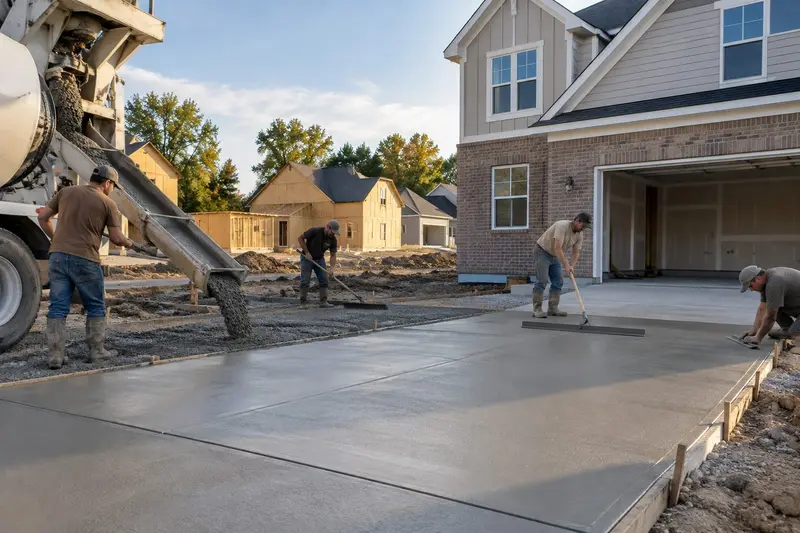
If your household has more cars than your driveway has room for, driveway widening is often the simplest fix. Instead of tearing out a slab that’s still in decent shape, new concrete gets poured alongside it. In Clermont, on the west side of Indianapolis, that might mean a few extra feet down one side, a parking pad beside the garage or a wider mouth at the street. Our driveway extensions page covers the full service. This post is about planning the add-on so it looks and works like it belongs.
Driveway Widening Options
- Full-length widening: a strip down one or both sides, from the garage to the street. Common when a two-car driveway needs to fit three.
- Side parking pad: a separate slab beside the driveway or garage for a trailer, boat, work truck or camper.
- Flared approach: a wider opening where the driveway meets the street, so turning in doesn’t put tires in the grass.
- Turnaround: a short pad that lets you back out, turn and pull forward onto the street.
Before the consultation, mark the outline with a garden hose or spray paint. Park the cars where you’d want them and open the doors. It’s the fastest way to see whether two extra feet is enough or whether you really need four.
Matching Old and New Concrete
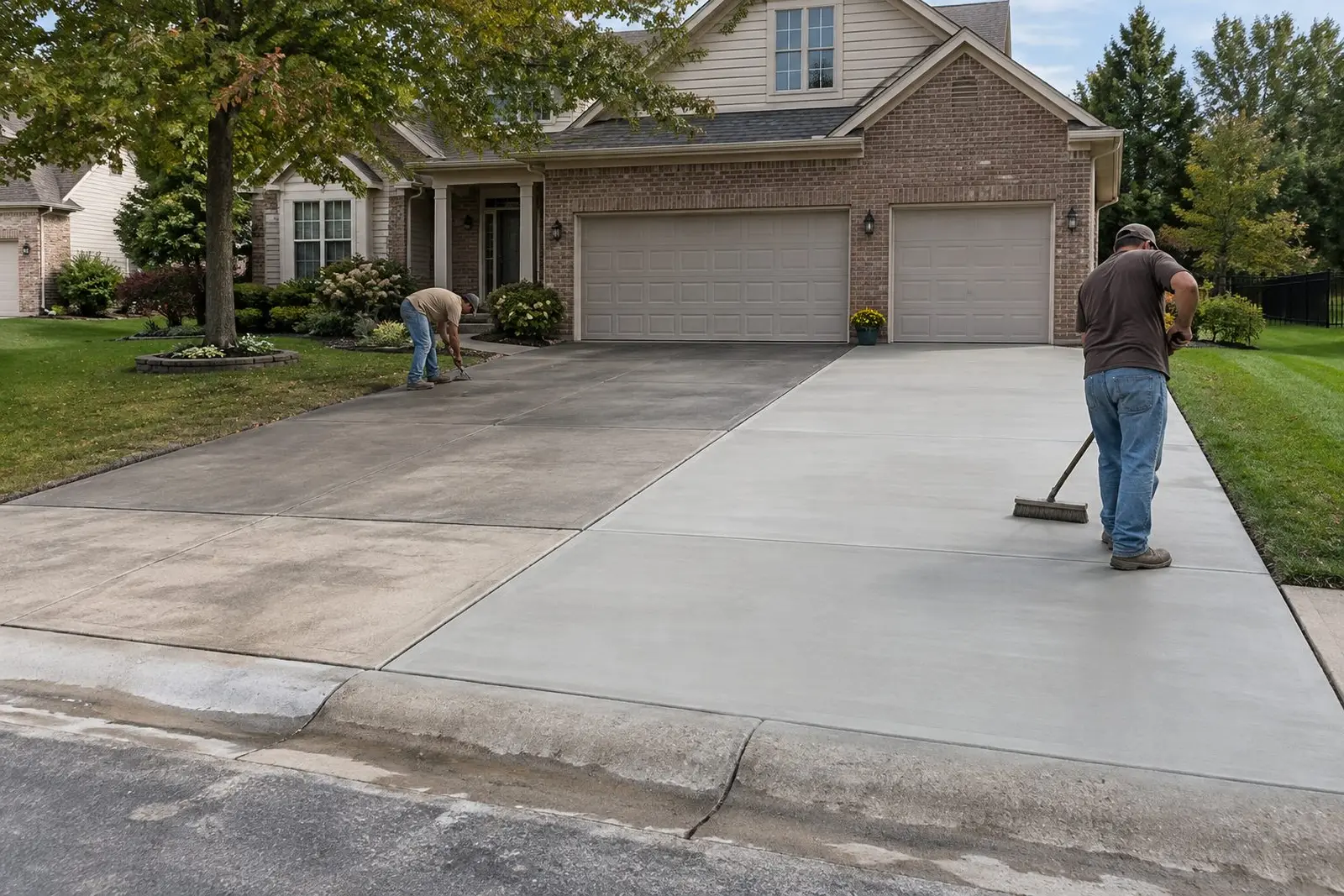
This is the question everyone asks. Honest answer: new concrete won’t match old concrete on day one. Fresh concrete is lighter, and your existing driveway has years of weather, tire marks and dirt on it. The difference narrows as the new section ages, but it rarely disappears completely.
A few choices make the seam look intentional. Matching the broom direction helps a lot. So does a straight, deliberate joint line where old meets new. Some owners go the other way and add a contrasting border, so the addition reads as a design choice instead of a patch.
How the New Section Meets the Old Slab
Where the new pour meets the existing driveway, the contractor has to decide how the two slabs relate. If the old driveway is sound and level, the new section is often tied into it so the two stay flush. If the old slab has settled or shifts with the seasons, an isolation joint lets each piece move on its own. Either way, the addition needs the same groundwork as any driveway: soil dug out, a compacted stone base and forms set to the right height.
Grade matters too. Rain that used to soak into the grass beside your driveway now has to go somewhere. The extension should slope away from the house and shouldn’t send runoff into a neighbor’s yard.
When an Extension Isn't the Answer
If the existing driveway is badly cracked, sinking or flaking, adding new concrete beside it just puts a good slab next to a failing one. In that case it often makes more sense to replace the whole driveway and build in the extra width at the same time. Our concrete driveways page covers full replacements and new installs. We’ll tell you honestly at the consultation which path fits.
Permits and the Street Approach
Work near the street can reach into the public right-of-way, and widening an approach or curb cut often needs a permit. Requirements vary by city and county, so we won’t guess at the rules for your address. Our concrete permits guide explains the general picture, and Golden Paw applies for any necessary permits as part of the job.
Cost depends on the size of the addition, access for the concrete truck, any sod or landscaping that has to come out, base work and the finish. All of it goes into your written, itemized estimate, so nothing comes as a surprise.
Driveway Extensions in Clermont
Clermont doesn’t have its own page on our site, but it’s part of the area we serve from our Indianapolis office. You’ll find it with the other towns we cover on our service area page. We pour concrete March through November, and estimates can happen any time of year.
Plan Your Driveway Extension in Clermont
Golden Paw Concrete will walk your driveway with you, sketch out the options and put the plan in writing. Call or text (317) 672-0966 or request a free estimate to book a consultation.