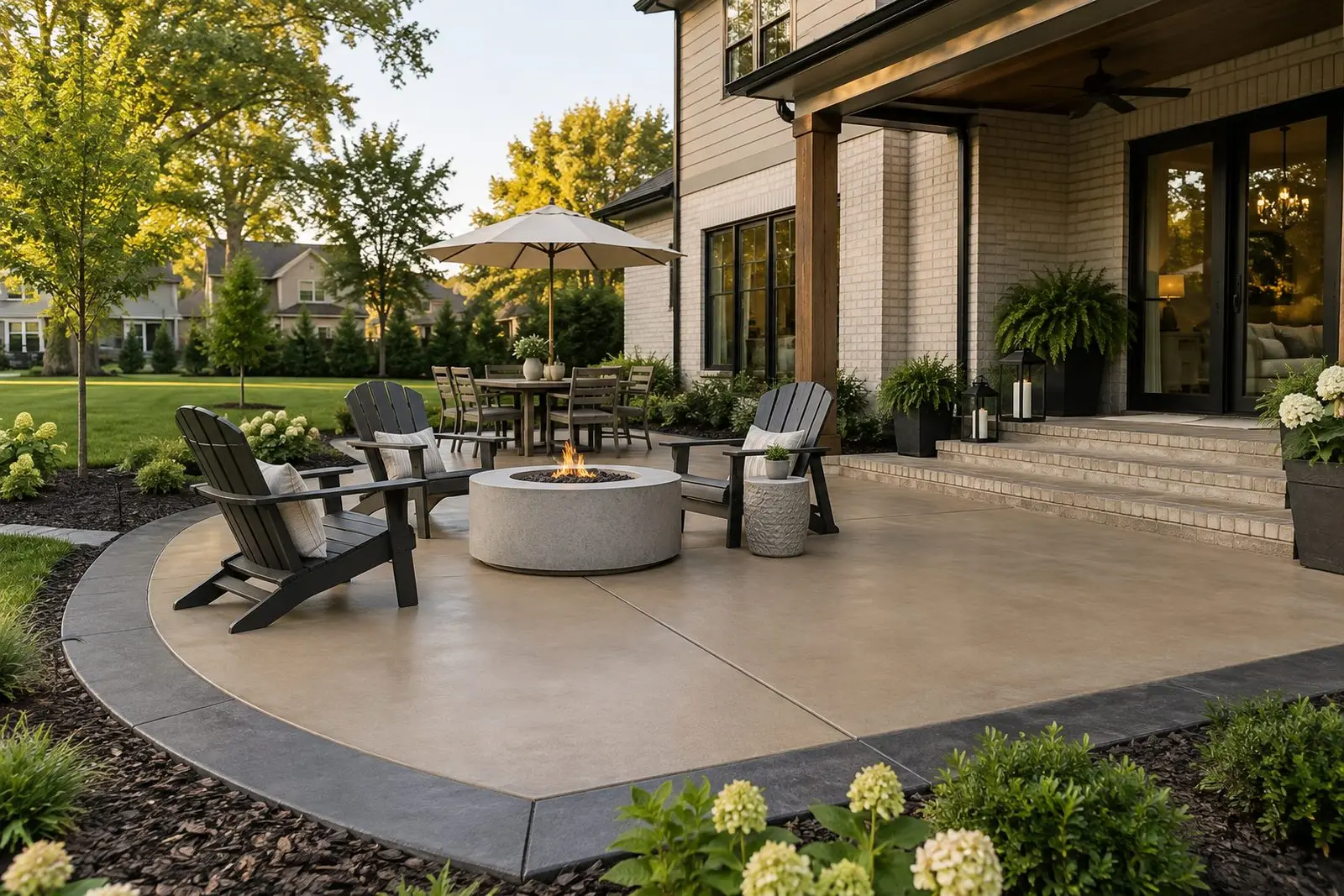
Patio Design Planning: Size, Shape, Slope and Finish
Good concrete patio designs start on the back step with a tape measure, not with a photo from the internet. How many people eat out there? Where does the grill go? Which corner bakes in the afternoon sun? Answer those first and the shape, size and finish of a new concrete patio almost choose themselves. This guide covers the planning questions Indianapolis homeowners should answer before anything gets formed.
Start With How You'll Use the Patio
List what will live on the slab. A dining table with chairs pulled out needs more room than people expect. So does a grill with space to stand at it safely. Lounge chairs, a fire pit, planters and a hot tub all claim floor space too.
Then think about traffic. People walk from the back door to the table, from the table to the grill, and from the patio out to the yard. Those paths should stay clear of furniture. A patio that feels tight on paper will feel tighter with six people on it.
Think a few years ahead, too. Maybe a hot tub comes later, or a pergola, or an outdoor kitchen. Telling us now means the layout can leave room for it, and it is far easier to plan a spot than to cut into a finished slab. The same goes for extending a small builder’s patio: matching and tying into old concrete is a design decision, not an afterthought.
Concrete Patio Designs: Shape, Size and Layout
Rectangles are the most efficient shape to form and pour. Curves soften a yard and work well around trees and beds. Many people split the difference with a rectangle that has one curved edge facing the lawn.
Attached to the house: easy access from the kitchen, but the slab has to slope away from the foundation.
Out in the yard: better views and more privacy, usually joined to the house with a walkway.
Multi-level: useful on sloped lots, with concrete steps or a low wall between levels.
Control joints are part of the design too. They tell the slab where to crack, and a good layout lines them up with doors, corners and pattern lines so they look intentional.
Sun, Shade, Slope and Water
Watch the yard for a day. A south or west patio is warm on April evenings and hot in July, so plan for an umbrella or a pergola. A shady patio under mature trees stays cool but collects leaves and moss, and roots near the slab can lift it over time.
Privacy and views count as well. Notice where the neighbors’ windows look down into the yard and where your own best view is from the table. Shifting a patio a few feet, or turning it, can fix both.
Water matters more than looks. Central Indiana clay soil drains slowly, so the slab needs a steady fall away from the house and a place for the water to go. Downspouts that dump onto a patio are an easy fix during planning and an annoying one afterward. Our drainage and grading guide goes deeper.
Picking a Finish and Edges
The finish sets the mood. A broom finish is clean and practical. Stamped concrete reads as stone or brick. Color can tie the patio to the house trim. Exposed aggregate brings pebble texture and grip. Our guide to choosing a finish compares all four in detail.
Edges deserve a thought as well. A smooth, contrasting border frames a stamped field nicely. A rounded edge is kinder to bare feet. If you are torn between a slab and pavers, read concrete vs. pavers before you decide.
Budget and Timing
Size is the biggest cost driver, followed by finish, access for equipment, any tear-out of an old slab, and extras like steps or walls. Our concrete cost guide explains how those factors stack up. Financing is available, and the details are covered at your estimate.
Timing is simpler. Golden Paw pours March through November, so winter is a good time to plan, compare finishes and get on the schedule for spring. Planning early also gives you time to sort out any HOA approval.
Plan Your Patio With Golden Paw
Bring your sketch, your photos and your list of must-haves. Golden Paw Concrete will walk the yard with you at a free, in-person consultation and turn it into a written, itemized scope. Ready to start? Request a free estimate or call or text (317) 672-0966.
Thickness, reinforcement and the base underneath decide how a slab holds up. Here's the general industry thinking, so you can read an estimate with confidence.