Builder grade concrete is the slab that came with the house. It is poured to get the home finished and sold, usually to the minimum the job calls for. Sometimes it holds up for years. Often it shows its limits sooner: a garage apron that drops, a patio too small for a table, a walk that tips toward the foundation. This guide explains what builder-grade usually means, the problems that come with it and when an upgrade makes sense. If you already know you want it gone, start with removal and replacement.
What Builder-Grade Concrete Usually Means
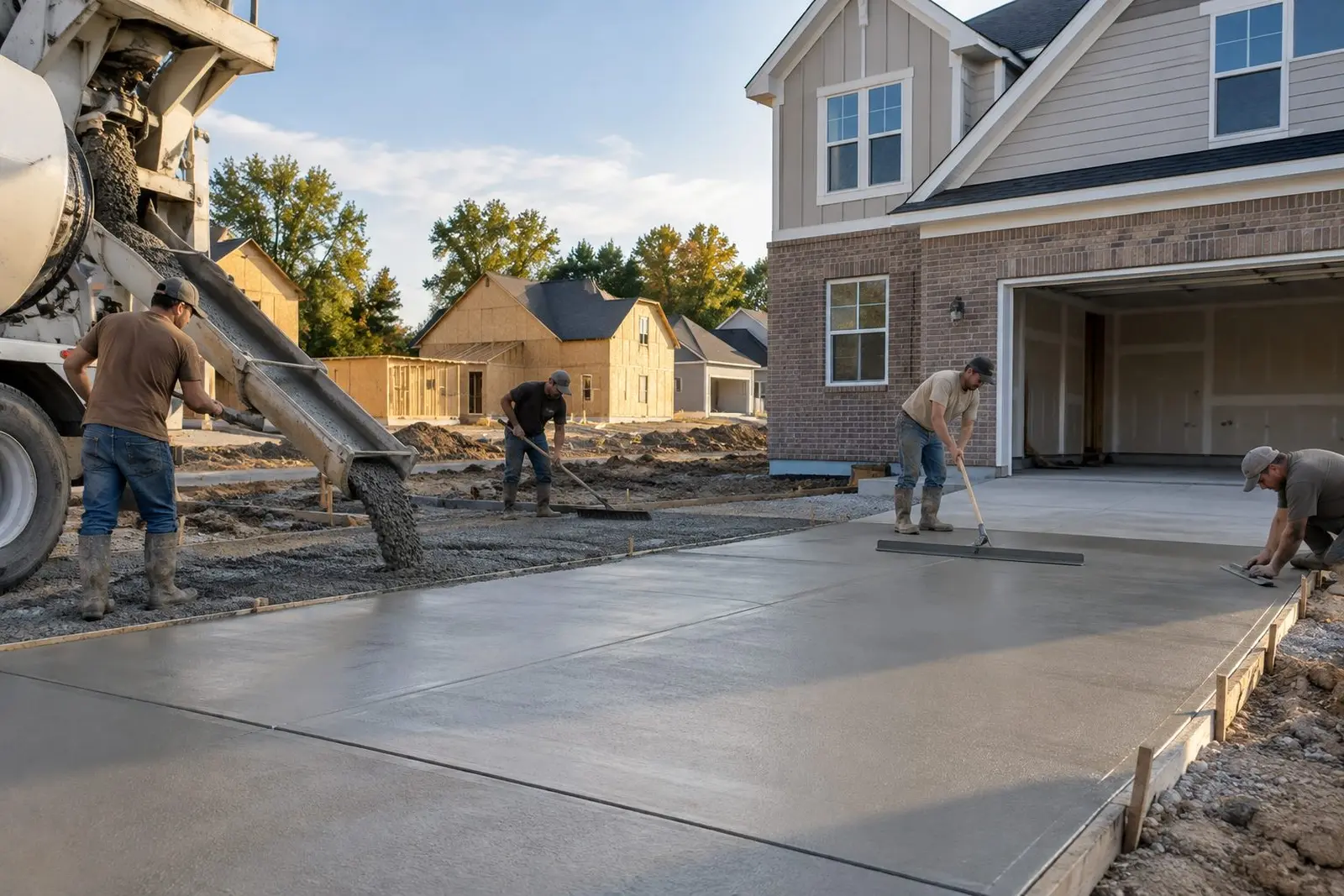
The term isn’t a standard. It is shorthand for concrete installed to meet the requirement, not to exceed it. On a new subdivision, flatwork is one of the last things to go in, often on a tight schedule and a tight budget. That tends to show up in a few ways:
- Slabs built to the minimum thickness, with little or no extra reinforcement.
- A plain broom finish with no color or texture choice.
- Small patios, often just a pad outside the back door.
- Concrete poured over soil that was recently dug up and backfilled.
None of these is automatically wrong. They are just the starting point. Our guide to concrete thickness and reinforcement explains the general thinking behind those decisions.
Common Builder-Grade Problems in Indianapolis Yards
The biggest issue is the ground. When a basement or foundation is dug, the soil around it gets loosened and pushed back in. That backfill keeps settling for a while. Concrete poured on top of it, like a garage apron, a front stoop or the walk along the house, can sink with it.
Indianapolis clay makes it worse. Clay holds water, swells and shrinks, and freezes hard in winter. Add downspouts dumping right next to a slab and you get frost heave, cracks and edges that lift or drop. De-icing salt on a thin, plain surface can lead to flaking and pitting within a few winters.
Signs It's Time to Upgrade
- A slab that has sunk, especially at the garage door or front steps.
- Cracks that keep widening or have one side higher than the other.
- Water that runs toward the house or sits in puddles after rain.
- A surface that is flaking, pitting or crumbling at the edges.
- A patio or driveway that simply doesn’t fit how you live now.
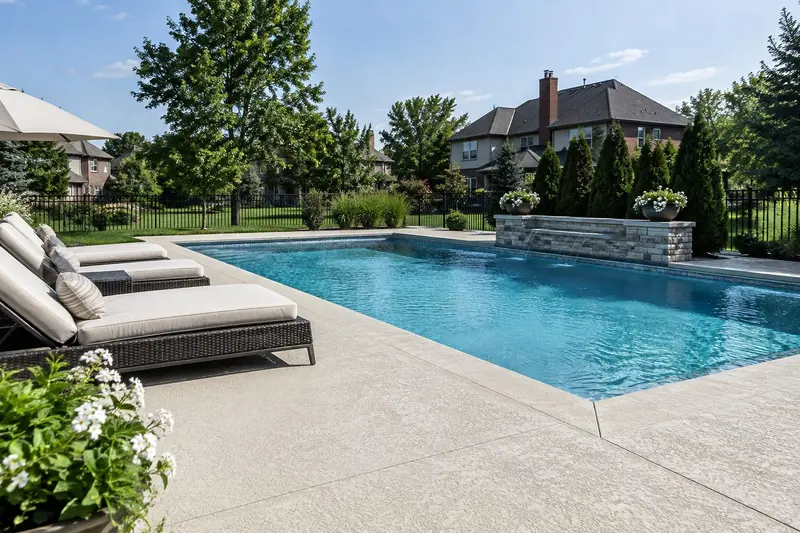
The last one counts. Plenty of upgrades have nothing to do with damage. People want room for a grill and a table, a third parking spot or a finish that matches the house.
Upgrade Options: Repair, Level, Extend or Replace
Not every builder-grade slab needs to come out. A few cracks or a little surface wear can sometimes be repaired. A slab that has settled but is still in one piece may be a candidate for concrete leveling, which lifts it back toward its original height. A sound slab that is just too small can often be extended with new concrete alongside it.
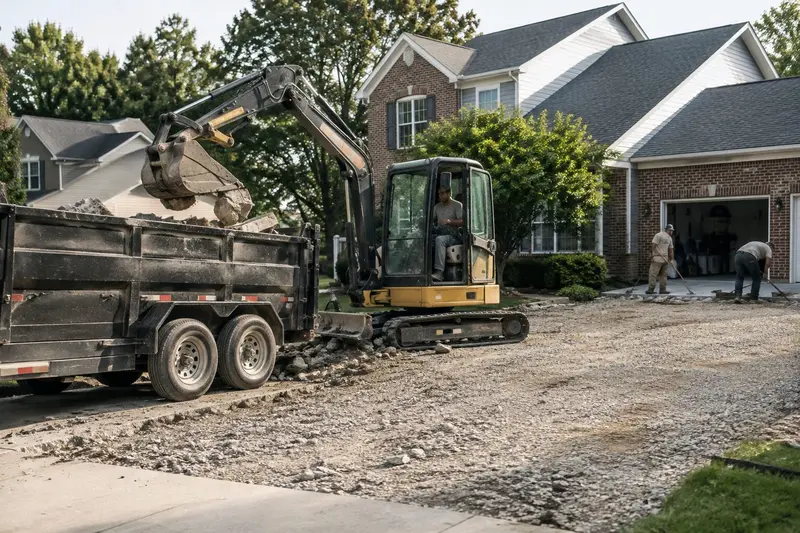
Replacement makes sense when the slab is badly cracked, sinking in several places or draining the wrong way. It also makes sense when you want a different size, shape or finish anyway. Replacing gives you a chance to fix the base, correct the grade and choose a decorative finish instead of plain broom. Our guide on whether to repair or replace walks through that decision.
Planning the Upgrade
If your home is still under a builder’s warranty, check what it says about flatwork before you change anything. Then think about the whole picture: driveway, walk, patio and steps. Doing connected pieces together usually gives a better match than patching one at a time. It can also make the most of one round of tear-out and equipment on your property.
Finally, fix the causes along with the concrete. Extend downspouts, correct the grade and build a proper base under the new slab. Otherwise the same settling and cracking can come back.
We pour March through November. Winter is a good time to plan, get a written scope and book a spring spot.
Upgrade With a Free Estimate
Golden Paw Concrete will look at the slab you have, explain what is causing the problem and lay out your options in a written, itemized scope, with no pressure to pick the biggest one. Call or text (317) 672-0966, or request a free estimate.