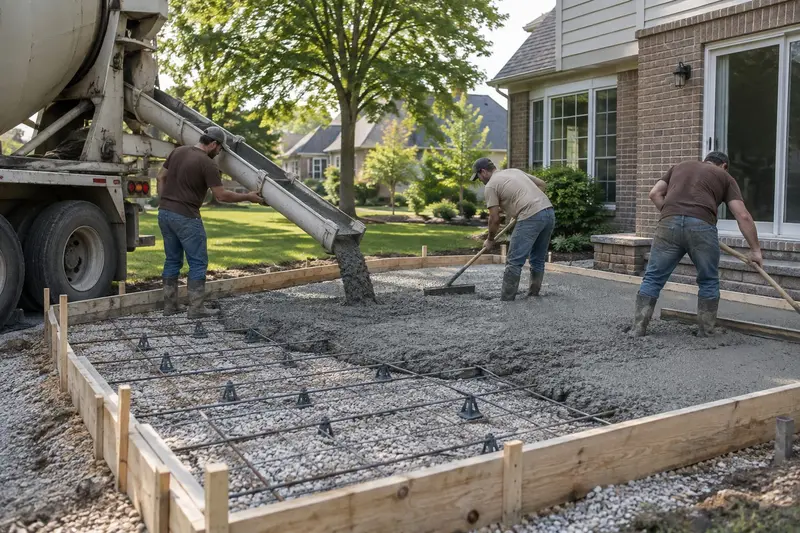
Move into a new home in Whitestown and the backyard patio is often a small rectangle of plain concrete by the back door. It works for a grill. It doesn’t fit a table, chairs and the people you want around them. The good news is that you have choices. You can extend a concrete patio the builder poured, replace it with something bigger or plan a new layout from scratch. Our concrete patio page covers the full service. This post focuses on what’s different about a new-build yard.
Why New-Build Patios Feel Small
Builders pour what the plan calls for, and the plan usually calls for a pad, not an outdoor room. It is typical builder-grade work: functional, plain and sized to the minimum. Our guide to builder-grade concrete explains the pattern in general. For a patio, the questions are simpler. How big should it be, and does the existing slab stay or go?
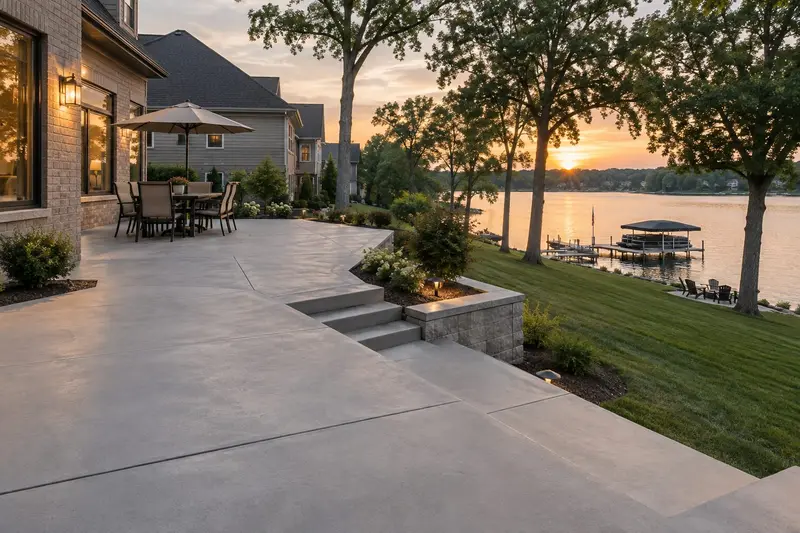
A useful starting point is to measure your furniture. Then add space to walk around it and pull chairs back. Many homeowners find they want at least double the original pad.
Think about what else you might add later, too. A path to the driveway, steps down from a raised back door, a spot for a fire pit or a hot tub pad are all easier to plan now than to fit in after the patio is poured. Our guide to patio design planning has more ideas on size, shape and layout.
Ways to Extend a Concrete Patio
There are two main routes, and the right one depends on the slab you have.
- Add on to the existing slab. New concrete is poured alongside the old pad, usually with a joint where the two meet. This works when the original slab is level, uncracked and draining away from the house.
- Replace it with a larger slab. The builder’s pad comes out and one new patio goes in. This makes sense if the old slab has settled or cracked, slopes the wrong way or you want a different shape.
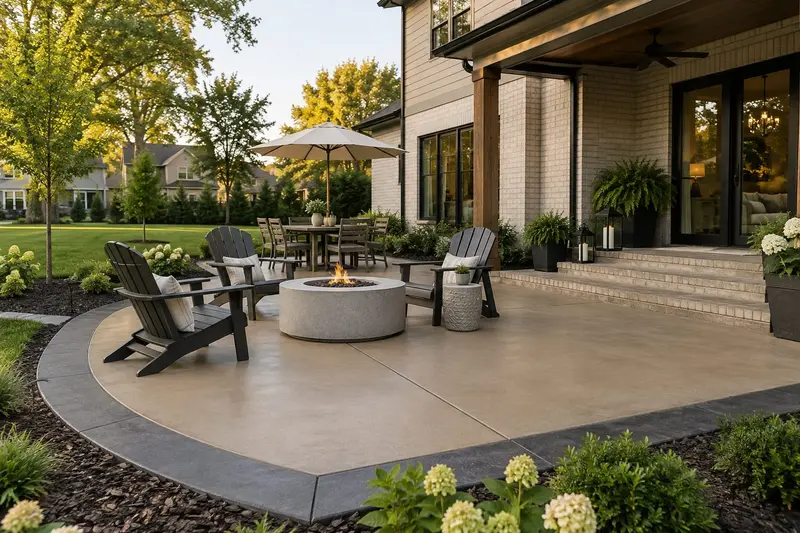
Replacement also lets you change the finish across the whole surface. A plain broom slab can become stamped concrete or a colored surface in one pour.
Matching Old and New Concrete
Be realistic about color. New concrete will not match a slab that has weathered for a few years, at least not at first. The difference softens over time, but it rarely disappears. Some homeowners lean into it with a border or a contrasting finish on the new section, so the change looks deliberate. Others decide the cleaner answer is to replace the whole thing. Bring up appearance at the estimate and we’ll talk through both.
Height is the other half of matching. The new section has to meet the old one flush and keep the same fall away from the house, so water doesn’t collect at the seam. If the builder’s pad has already tipped or sunk, an add-on will inherit that problem. In that case, replacing the whole patio is often the better investment.
Timing Around a New Yard
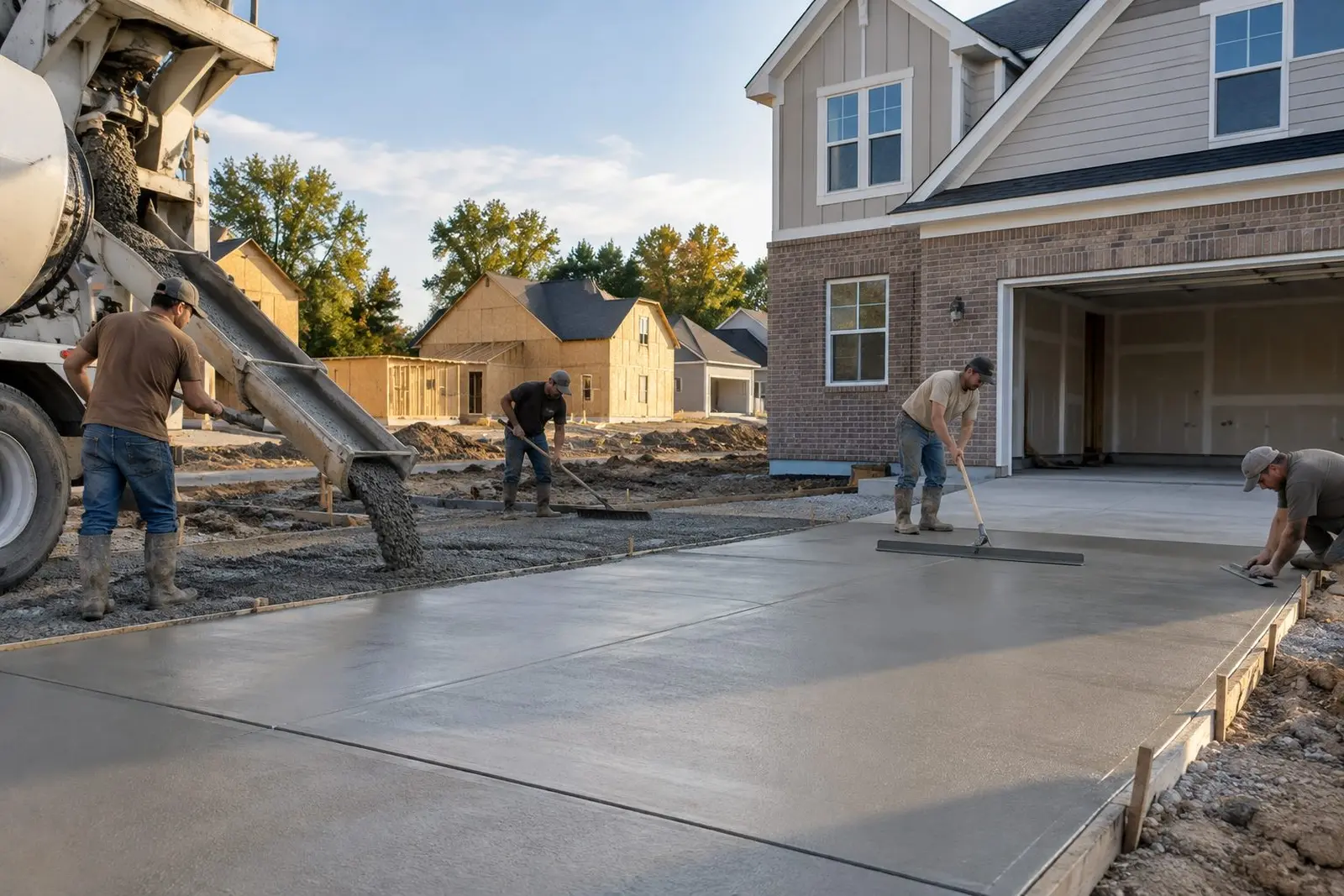
New construction yards are still settling. The soil around the foundation was dug out and backfilled, and it can keep compacting for a while. That is one reason builder patios near the house sometimes sink or tip. Before extending, we look at how the existing pad has held up and how the yard drains.
Downspouts matter here too. A downspout that empties onto or beside the patio sends water under the slab every time it rains. Planning the patio is a good time to reroute it. We pour March through November, so a winter consultation sets you up for a spring patio.
Approvals in a Newer Subdivision
Many newer neighborhoods have an HOA that wants to approve patio additions first. Check your covenants and get approval in writing. If the house is still under a builder’s warranty, read what it says about changes to the lot and grading. When the project needs a city or county permit, Golden Paw applies for it as part of our process.
Plan Your Whitestown Patio
Golden Paw Concrete serves Whitestown along with Lebanon, Zionsville and the rest of our service area. We’ll look at your builder’s slab, measure the space you want and put the options in a written scope. Call or text (317) 672-0966, or request a free estimate.